
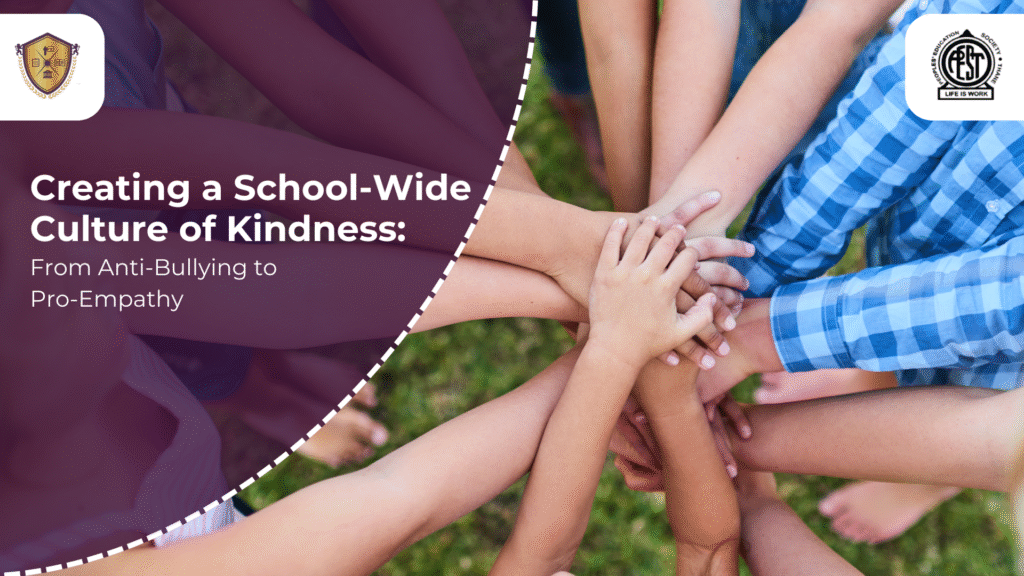
A school is more than classrooms, lessons and exams. It is a space where children learn how to treat one another, how to respond to differences and how to grow into kind and responsible individuals. While many conversations around student behaviour focus on stopping bullying, the real change begins when a school actively encourages empathy, care and mutual support.
At our school, kindness is not treated as a rule to be enforced. It is a value that is practised every day through small actions, thoughtful choices and a strong sense of community among students.
Moving Beyond “Don’t Bully” to “Help Each Other”
Telling children not to bully is important but it is only the first step. True emotional growth happens when students are taught what to do instead. Helping a classmate who is struggling, standing by someone who feels left out and offering support during difficult moments builds a culture where empathy comes naturally.
Students are encouraged to look out for one another. Whether it is helping a peer understand a concept during educational activities, sharing notes when someone is absent or simply listening to a friend who feels overwhelmed, these everyday gestures make a lasting impact. Over time, children learn that strength lies in kindness and leadership begins with care.
Empathy as a Life Skill
Empathy is not something children are born knowing how to practise fully. It is a skill that needs guidance, reflection and real-life experience. Through classroom discussions, group activities and collaborative learning, students are guided to see situations from different perspectives.
When children understand how their words and actions affect others, they become more mindful of their behaviour. They begin to respond with patience rather than judgment and with understanding rather than mockery. This shift creates a safe and inclusive environment where every child feels valued.
Peer Support in Everyday School Life
One of the strongest indicators of a healthy school culture is how students treat one another when adults are not watching. At our school, peer support often shows itself in simple moments. A senior student guiding a junior through a new routine. A group welcoming a new classmate without hesitation. Students stepping in when someone feels unsure or isolated.
These actions may seem small, but they show a powerful message. Students learn that they are never alone and that asking for help is not a weakness. They also understand that offering help is a responsibility they carry as part of the school community.
Teachers as Role Models of Kindness
A culture of empathy starts with an example. Teachers play a crucial role in modelling respectful communication, fairness and compassion. When students observe adults listening patiently, addressing concerns calmly and treating every child with dignity, they naturally reflect those behaviours.
Open conversations, encouragement and gentle correction help students understand that mistakes are part of learning. This approach reduces fear and builds trust, making it easier for children to express themselves and seek guidance when needed.
Creating Safe Spaces for Emotional Expression
Children face emotional challenges just as adults do, though they may not always have the words to express them. A supportive school environment allows students to talk about their feelings without fear of being judged or mocked.
By creating safe spaces to talk, our school ensures that concerns are addressed early. When students feel heard, they are more likely to support others with sensitivity and respect. This emotional awareness strengthens bonds and reduces conflicts before they grow into serious issues.
Kindness That Extends Beyond School
The values children practise in school shape the adults they become. A culture of empathy does not end at the school gate. Students who learn to help rather than hurt carry those lessons into their homes, friendships and future workplaces.
By encouraging kindness, responsibility and mutual respect, our school nurtures individuals who understand the importance of community. These students grow up knowing that success is not only about personal achievement but also about uplifting those around them.
A Shared Responsibility
Creating a school-wide culture of kindness is a shared effort. It involves students choosing empathy, teachers guiding with care and the school reinforcing values that prioritise emotional well-being alongside academic growth.
At Indo Scots Global School,Thane – this collective commitment ensures that every child feels supported, respected and empowered. When kindness becomes a habit rather than an instruction, schools become spaces where children grow not just academically but also as compassionate human beings.