
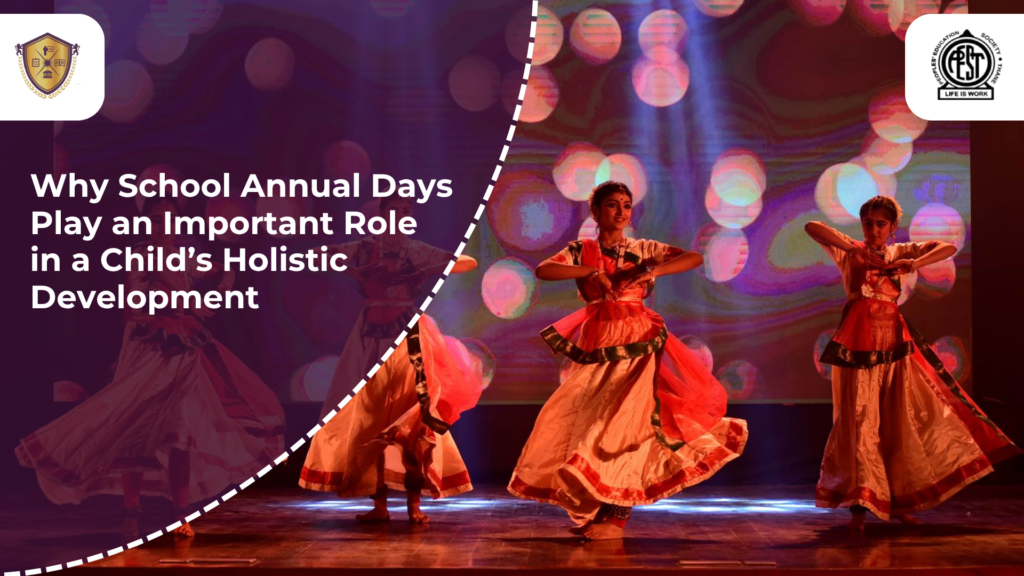
Every parent knows the feeling of watching their child walk onto a stage for the first time. There may be a little nervousness, a few missed steps or a moment of hesitation, but when the child finally smiles at the audience, the feeling of pride is hard to put into words. These small moments often become some of the most cherished memories of school life.
A school annual day is much more than a celebration filled with performances, music and colourful costumes. It gives children an opportunity to discover their abilities, express themselves and learn lessons that go beyond textbooks. From building confidence to learning teamwork, annual day celebrations play an important role in a child’s holistic development.
1. Building Confidence and Overcoming Stage Fear
Standing in front of an audience can feel intimidating for a child, especially when it is their first performance. The thought of forgetting a line, missing a dance step or making a mistake can make them nervous.
However, with regular practice, encouragement from teachers and support from parents, children gradually learn to overcome these fears. Every rehearsal helps them feel more prepared and comfortable.
When children finally step onto the stage, they experience the joy of accomplishing something they once found difficult. This confidence can also help them participate more actively in classroom discussions, presentations and other school activities.
2. Encouraging Creativity and Self-Expression
Every child has a unique way of looking at the world. Some enjoy dancing, others love acting and many express themselves through music, storytelling or art.
Annual day celebrations provide a platform for children to explore these interests and showcase their talents. They get the freedom to try something new, experiment with different roles and express their ideas in creative ways.
Such experiences help children understand that learning is not limited to books and examinations. It can also happen through movement, imagination, performance and the freedom to express themselves.
3. Teaching Teamwork and Cooperation
A successful annual day performance is rarely the effort of one child alone. It takes an entire group working together to make it happen.
Children learn to coordinate their movements, listen to instructions, share responsibilities and support their classmates. They also understand the importance of being punctual for rehearsals and respecting the efforts of others.
Sometimes, they may have to adjust their performance to match the group or help a classmate who is struggling. These experiences teach them patience, cooperation and the value of working towards a shared goal.
These lessons can help children build stronger friendships and develop healthy relationships as they grow.
4. Developing Communication and Social Skills
Whether a child is delivering a dialogue, introducing a performance or interacting with fellow participants, an annual day offers several opportunities to improve communication skills.
Children learn to speak clearly, listen carefully and communicate their thoughts with greater confidence. They also become more comfortable interacting with teachers, classmates and people beyond their usual social circle.
For children who are naturally shy, participating in a group performance can be a gentle way to step out of their comfort zone. With time and encouragement, these experiences can help them become more confident in social situations.
5. Helping Children Understand Discipline and Responsibility
Preparing for an annual day requires time, effort and consistency. Children need to attend rehearsals, remember their cues, practise their performances and follow instructions.
Through this process, they begin to understand the importance of discipline and responsibility. They realise that good results come from regular practice rather than last-minute preparation.
They also learn to manage their time and stay committed to a task even when it becomes challenging. These habits are useful not only during school activities but also in their academic journey and everyday life.
6. Nurturing Emotional Growth and Resilience
Not every rehearsal goes perfectly. A child may forget a step, struggle to remember a dialogue or feel disappointed when something does not go as planned.
These moments are valuable learning opportunities. With the right guidance, children learn that making mistakes is a natural part of learning and that improvement comes with practice.
They also learn to manage nervousness, handle disappointment and appreciate the efforts of others. Celebrating a classmate’s performance, accepting feedback and trying again after a mistake can help children develop empathy, patience and emotional resilience.
Over time, they begin to understand that success is not always about being the best performer. It is also about having the courage to participate and giving their best effort.
7. Celebrating Culture, Values and a Sense of Belonging
School annual days often bring together music, dance, drama and performances inspired by different cultures, traditions and stories. Through these experiences, children learn about their heritage and develop respect for different perspectives.
They may discover the meaning behind a traditional dance, understand the importance of a historical event or explore values such as kindness, courage and unity through a short play.
Annual day celebrations also bring students, teachers and parents together. When children see their families cheering for them and their teachers celebrating their efforts, they develop a stronger sense of belonging to their school community.
8. Helping Parents Discover Their Child’s Potential
As parents, you may see your child learning new concepts, completing homework and preparing for examinations every day. But an annual day can reveal a different side of your child.
You might discover that your quiet child enjoys acting, your energetic child has a natural sense of rhythm or your child who usually avoids attention is comfortable speaking on stage.
These experiences help parents recognise interests and abilities that may not always be visible in the classroom. They also create opportunities to encourage children to explore their talents without putting pressure on them to perform perfectly.
Every child develops at their own pace, and recognising their individual strengths is an important part of supporting their growth.
How Indo Scots Global School Supports Holistic Development
At Indo Scots Global School, education goes beyond academic achievement. A child’s development also includes building confidence, nurturing creativity, learning to work with others and developing the skills needed to navigate everyday life.
Activities such as annual day celebrations give students opportunities to put these skills into practice in a supportive environment. With guidance from teachers and encouragement from their families, children can explore their interests, learn from their experiences and celebrate their progress.
The focus is not simply on delivering a perfect performance. It is on helping every child participate, discover their potential and enjoy the learning journey.
Conclusion
A school annual day may last only a few hours, but the lessons children learn while preparing for it can stay with them for years. The confidence to stand before an audience, the patience to practise, the joy of working with friends and the courage to try something new all contribute to their growth.
As parents, it is important to remember that every child has a different journey. Some may shine on stage, while others may find their strength in supporting their classmates behind the scenes. Both experiences are valuable.
When schools create opportunities for children to explore their abilities beyond academics, they help them grow into confident, creative and compassionate individuals. And that is what holistic education is truly about.