
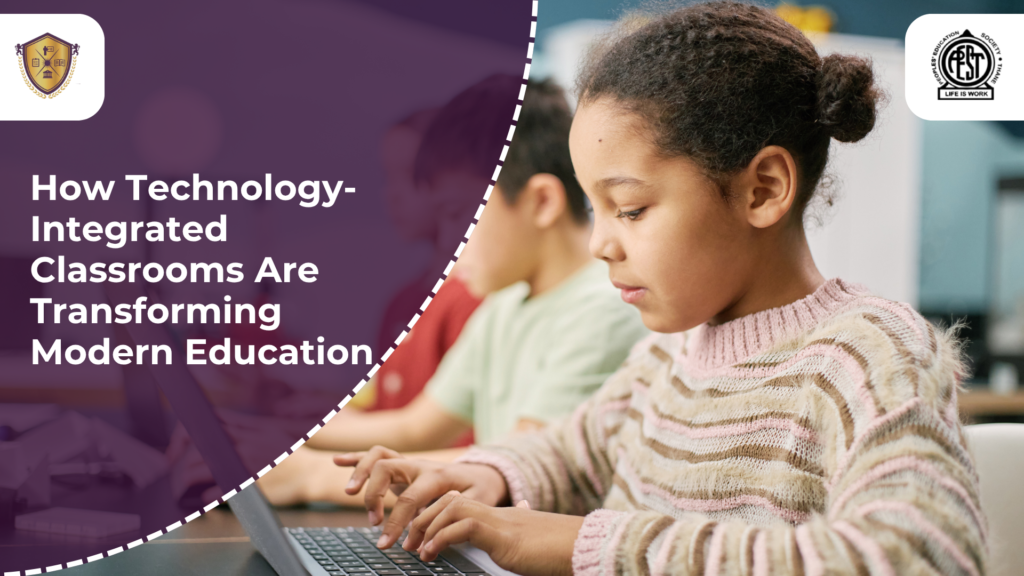
Walk into a classroom today and it feels different. The blackboard is no longer the center of attention. Instead, you’ll see interactive screens, teachers guiding discussions with video simulations and real-time quizzes. It’s not just a visual upgrade. It’s a complete shift in how children learn, think and engage with the world around them.
At Indo Scots Global School, this shift is not treated as a trend. It is seen as a responsibility. Because children are preparing for a technology-driven world, their learning environment needs to reflect that reality in a meaningful and balanced way.
Let’s understand how technology-integrated classrooms are truly transforming modern education.
Learning Becomes More Engaging
Think about how difficult it used to be to stay focused during long lectures. Now imagine a classroom where concepts come alive through animations, virtual experiments and interactive content.
Technology adds a layer of engagement that traditional methods often struggle to achieve. A science lesson is no longer just theory from a textbook. It can include a virtual lab where students can see chemical reactions unfold. A history class can turn into a visual journey through timelines, maps and real footage.
When students see and experience what they are learning, they connect with it more effectively. And when they are interested, they naturally want to learn more.
Every Child Learns at Their Own Pace
One of the biggest challenges in any classroom is that every child learns differently. Some grasp concepts quickly while others need more time and support. Technology helps bridge this gap. With digital tools and adaptive learning platforms, students can revisit lessons, pause, replay or explore additional material based on their comfort level.
A child who needs more math practice can access exercises that match their pace. Another who is ahead can explore advanced concepts without feeling held back. This creates a learning environment where no student feels left behind and no one feels restricted.
Teachers Become Guides, Not Just Instructors
Technology does not replace teachers. It enhances their role. Instead of spending most of the time delivering information, teachers can focus on guiding, mentoring and interacting with students. They can use data from digital tools to understand where a student is struggling and provide targeted support.
This shift makes classrooms more interactive. Students ask more questions. Teachers have more meaningful conversations. Learning becomes a two-way process instead of a one-sided lecture.
At Indo Scots Global School, teachers use technology to build stronger connections with students, not to distance themselves from them.
Real-World Skills Start Early
The future workplace demands more than just academic knowledge. It requires problem-solving, critical thinking, communication and digital literacy. Technology-integrated classrooms naturally introduce these skills.
Students learn how to research information, evaluate sources, collaborate on digital platforms and present their ideas confidently. They work on projects that require creativity and logical thinking. They become comfortable using tools that are already a part of real-world environments.
This early exposure helps them grow into confident individuals who are prepared for challenges beyond the classroom.
Learning Extends Beyond the Classroom
Education is no longer limited to school hours. With technology, learning continues even after students leave the classroom.
Assignments, resources and discussions can be accessed from home. Students can revise lessons, watch recorded sessions and stay connected with their teachers and peers.
This flexibility is especially helpful when a student misses a class or needs extra revision before exams. It also encourages independent learning, where students take ownership of their progress.
For parents, this creates better visibility into their child’s learning journey. They stay informed and involved without feeling disconnected.
Creativity Finds a New Platform
Not every child expresses themselves through written answers. Some think visually. Others communicate better through audio or presentations. Technology opens up new ways for students to showcase their creativity.
A project can be a video instead of a written report. A presentation can include animations and storytelling. Students can design, create and experiment in ways that were not possible earlier. This freedom allows children to explore their strengths and build confidence in their unique abilities.
Challenges Are Managed with Balance
While technology provides significant benefits, it is essential to use it responsibly to maximize its advantages. Over-dependence on devices can become a concern.
This is where the role of the school becomes important.
At Indo Scots Global School, technology is used with purpose. It is blended with traditional teaching methods, physical activities and interactive learning. The goal is not to replace human connection but to enhance learning in a balanced way.
Students are guided on responsible usage, digital etiquette and maintaining a healthy relationship with technology.
A Learning Experience That Feels Relevant
One of the most important changes technology brings is relevance. Students often wonder whether what they are learning will help them in real life. Technology helps answer that question by connecting lessons to real-world applications.
Whether it’s understanding global issues through live data, learning coding basics or exploring career-oriented tools, students begin to see the purpose behind their education.
Final Thoughts
Education is evolving and classrooms are evolving with it. Technology-integrated learning is not about replacing books or teachers. It is about creating an environment where students are curious, engaged and prepared for the future.
This approach is shaping a generation that is not just academically strong but also confident, adaptable and ready to take on the world.
Because the goal is simple. Not just to teach students what to learn, but to show them how to utilise what they learn and grow in a world that is constantly changing.